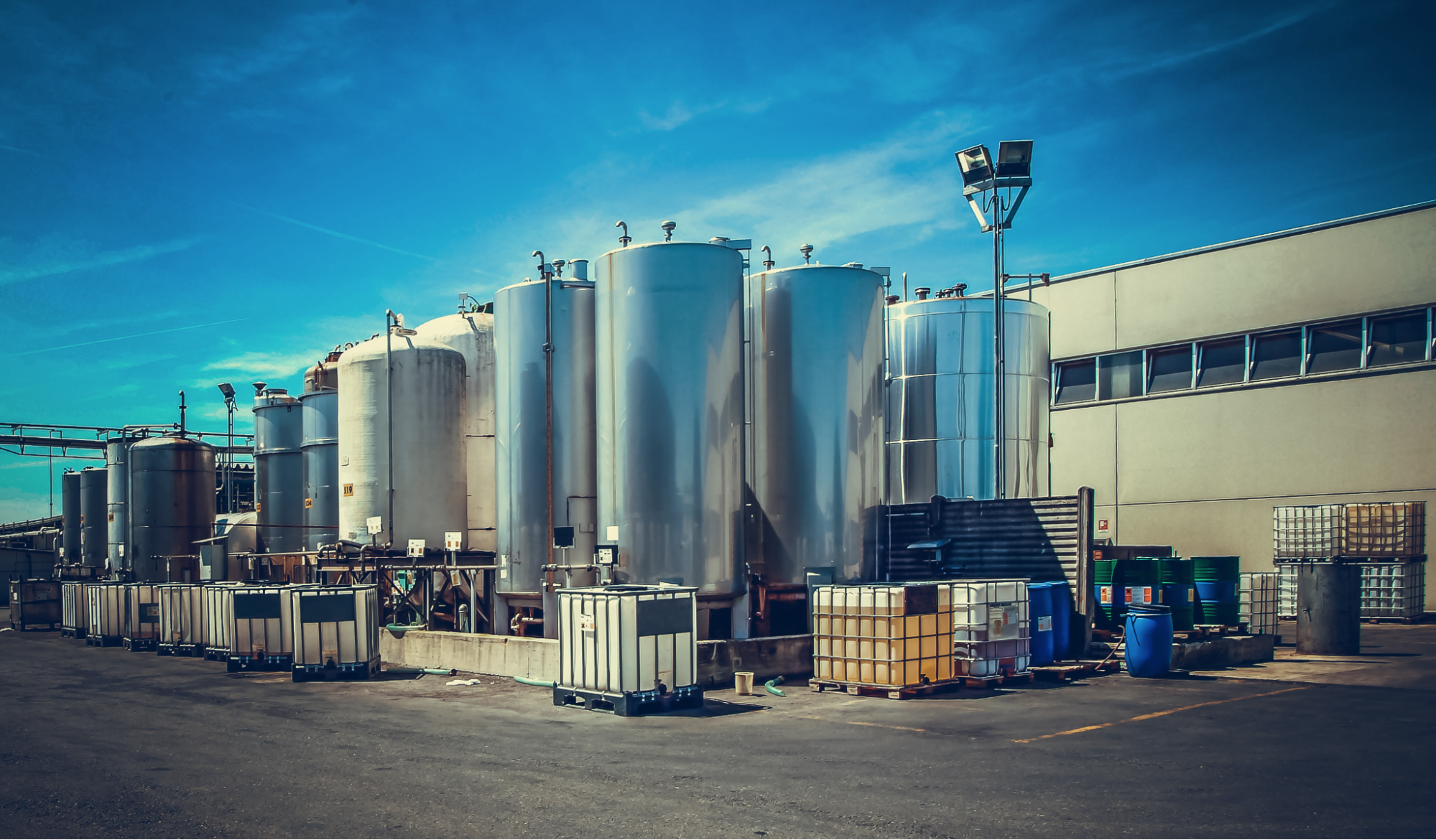
Keeping chemical production on schedule requires a steady movement of materials between storage tanks, processing equipment and packaging lines. Each transfer plays a role in maintaining production, and delays at one stage can affect the operations that follow.
In chemical processing, a pump that easily transfers a thin solvent may struggle when handling a viscous resin. Differences in viscosity, temperature and chemical composition can change what the transfer system demands, even when the production schedule remains the same. When equipment is poorly matched to those conditions, the consequences may include premature wear, unplanned maintenance and further production delays.
Internal gear pumps are commonly used for these duties because their positive displacement design can handle liquids across a broad viscosity range. However, the pumping principle alone does not determine whether a particular model will perform reliably. In this blog, we explore what makes industrial fluids difficult to transfer, how internal gear pumps work and which application requirements engineers should evaluate before selecting equipment.
What Makes Industrial Fluids Difficult to Pump?
Chemical manufacturers move liquids between storage tanks, mixing vessels, processing equipment and packaging lines, often under different conditions at each stage. For example, a formulation that transfers easily when warm may become considerably more viscous after cooling in storage. As a result, engineers need to understand both the fluid's properties and how those properties may change during normal operation, startup or shutdown.
Several factors deserve attention when defining the pumping duty:
Viscosity: Resins, polymers and adhesives may require different operating speeds and suction conditions than thin solvents or oils.
Chemical compatibility: Wetted materials, seals and gaskets must withstand the fluid at its expected concentrations and temperatures.
Temperature: Products that thicken as they cool may require heat during storage, startup or transfer.
Flow and pressure: The pump must deliver the required volume while overcoming piping losses and discharge pressure.
Maintenance access: Technicians need practical access to sealing components, adjustments and replaceable parts.
These considerations rarely operate independently. If a material thickens as its temperature drops, the change may affect suction performance and the pressure required to move it through the line. Understanding those relationships is more useful than evaluating a published capacity figure in isolation, particularly when the same pump must operate across changing process conditions.
How Internal Gear Pumps Handle Viscous Fluids
Internal gear pumps move liquid using a rotor and an idler gear housed inside a casing. As the gears unmesh near the inlet, expanding spaces draw liquid into the pump. The fluid then travels between the gear teeth and the casing, around a crescent-shaped partition that separates the suction and discharge areas. When the gears reengage near the outlet, the spaces contract and force the liquid into the discharge line.
Because the gears displace a volume of liquid with each rotation, flow is closely related to operating speed. That characteristic makes internal gear pumps useful for controlled transfer of viscous fluids, although actual delivery still depends on differential pressure, viscosity, internal clearances and pump condition. Engineers therefore need to assess the complete operating range rather than assume that one rated flow value applies throughout the process.
What Should Engineers Check Before Selecting an Internal Gear Pump?
Understanding the operating principle is only part of specifying the equipment. A pump may meet the required flow at normal production temperature but face very different conditions during a cold startup or when the formulation changes. For that reason, an effective selection review should cover both the fluid and the system in which the pump will operate.
Key considerations include:
- Fluid conditions: Check minimum and maximum viscosity, temperature, abrasiveness and chemical compatibility, including startup conditions.
- Hydraulic requirements: Confirm flow, differential pressure, suction conditions and the operating speed needed to meet the duty.
- Installation requirements: Review port orientation, available space, driver arrangement and compatibility with existing piping.
- Maintenance requirements: Evaluate shaft-seal selection, access to service points and the ability to adjust internal clearances.
The goal is to identify conditions that could affect delivery after the pump is installed, not simply confirm that its nominal rating looks sufficient. With those requirements documented, engineers can compare equipment features against the actual process demands.
Why Select Blackmer® G Series Pumps in Chemical Processing?
Blackmer® G Series Internal Gear Pumps offer several design features intended to support installation flexibility and routine service.
- Adjustable end clearances: Single-point adjustments help compensate for wear and accommodate application requirements.
- Construction options: Cast iron, carbon steel and stainless steel models provide material choices for different fluids.
- Reversible operation: The rotor-idler design permits pumping in either direction when the system is configured appropriately.
- Rotatable casing: Multiple port orientations help accommodate different piping arrangements.
- Accessible sealing components: Drive-end access to the shaft seal can simplify inspection and maintenance.
G Series Internal Gear Pumps in cast iron and carbon steel construction are offered with nominal capacities up to 500 gallons per minute (gpm) and maximum discharge pressure ratings of 200 psi (13.8 bar). Stainless steel versions have ratings up to 150 psi (10.3 bar), depending on the model. Jacketed cast iron configurations are also available when a process requires temperature control around the pump, while certain models are designed for interchangeability with up to 95% of applicable internal gear pumps, subject to dimensional and application review.
Choosing a Pump for Demanding Chemical-Processing Applications
A reliable transfer system has to handle the fluid as it actually behaves, not merely as it appears on a specification sheet. When engineers account for changes in viscosity, temperature and pressure, they can identify a pump configuration that supports consistent production and can be serviced without unnecessary disruption. Blackmer G Series Internal Gear Pumps offer features that support these requirements, but the final choice should follow the fluid and operating conditions rather than the nameplate rating alone.
For more information, read our white paper: Tough Fluids, Steady Flow:The Advantages of Internal Gear Pumpsin Industrial Operations.
Need help selecting a reliable internal gear pump for your chemical processing application? Fill out our contact form or contact your local distributor to connect with a specialist who can help you evaluate your fluid-transfer requirements.