In tank truck transport, a pump may have an impressive published flow rating, yet the
transfer can take longer than expected once the liquid encounters restrictive hoses, discharge pressure and changing suction conditions. When that difference repeats across a
fleet, even modest delays can complicate scheduling and increase operating costs.
For operators transferring petroleum products, lubricating oils and other industrial liquids, pump selection therefore involves more than comparing rated capacities. External
gear pumps and sliding vane pumps both use positive displacement principles,
but their designs respond differently to internal slip, component wear and maintenance demands. This blog explores how those differences influence tank truck loading and
unloading performance over time.
Why Rated Flow and Actual Unloading Capacity Differ
A published flow rating describes pump performance under specified conditions, but it doesn’t necessarily predict the delivery rate of a
truck's complete transfer system. As liquid moves through hoses and fittings, restrictions increase the pressure the pump must overcome. At the same time, the fluid's viscosity, the pump's speed and the
condition of its internal parts influence how much liquid actually reaches the receiving tank.
Engineers should examine several factors together:
Hose restrictions: Small-diameter hoses and long transfer runs increase friction losses, particularly at higher flow rates.
Fluid properties: Viscosity affects both line resistance and leakage within the pump.
Discharge pressure: Higher differential pressure can increase internal slip and reduce delivered capacity.
Operating speed: Pump speed influences theoretical displacement and actual flow.
Equipment condition: Wear can increase internal clearances and lower volumetric efficiency over time.
Because these factors interact, two pumps with similar published capacities can perform differently on the same route. A more useful comparison is how consistently each design
delivers the required flow under normal operating conditions and as its components wear.
How Internal Slip Affects External Gear Pump Performance
External gear pumps use two meshing gears to move liquid from the suction port to the discharge port. Fluid travels around the outside of the gears in spaces between the teeth
and casing, while tight internal clearances help limit leakage. Those clearances are important to delivered capacity. However, normal component wear can enlarge them and allow
more fluid to recirculate toward the suction side.
The resulting internal slip reduces the volume delivered to the receiving tank, particularly when differential pressure increases or the liquid offers less resistance to leakage.
External gear pumps remain useful for many duties, including viscous-liquid transfer, but when comparing designs, operators should consider how the pump will perform after
repeated loading and unloading cycles, not just when its components are new.
How Self-Adjusting Vanes Help Maintain Consistent Flow
Sliding vane pumps address wear through a different internal design. A rotor
fitted with vanes turns inside the casing, forming chambers that carry fluid from inlet to discharge. Centrifugal force, push rods and liquid pressure help move the vanes
outward, allowing them to maintain contact with the casing as their surfaces wear. By limiting changes in internal leakage, the design can help sustain delivered flow over time.
For tank truck operators, this operating principle provides several practical advantages:
Flow consistency: Wear-compensating vanes help maintain pumping capacity over repeated transfers.
Self-priming: Sliding vane pumps can initiate transfer without a continuously flooded suction, within specified operating limits.
Line stripping: Suction performance helps remove residual liquid from transfer hoses and piping.
Serviceability: Replaceable vanes let technicians address wear without replacing the entire pump.
Maintaining flow is important during unloading, but the value extends beyond deliveries. A pump that can recover product from hoses and has accessible wear components may help
reduce the time spent completing a transfer and preparing equipment for the next one.
Why Serviceability Matters for Transport Fleets
Even when a pump delivers the required flow, maintenance can determine whether a truck remains available for its next scheduled load. Removing a pump for a routine repair may
keep a vehicle out of service longer than the repair itself requires. Consequently, operators should evaluate component accessibility, inspection procedures and the time needed
to return a pump to operation alongside its hydraulic performance.
Neither sliding vane nor external gear technology has a universal maintenance
advantage in every installation. Service requirements depend on the specific design, fluid and operating conditions, so a meaningful comparison should include repair access and
expected service demands as well as flow capacity, suction performance and purchase price.
Selecting a Pump for Long-Term Transport Performance
The right transport pump must deliver adequate flow through the actual hose and piping arrangement while remaining practical to maintain over many delivery cycles.
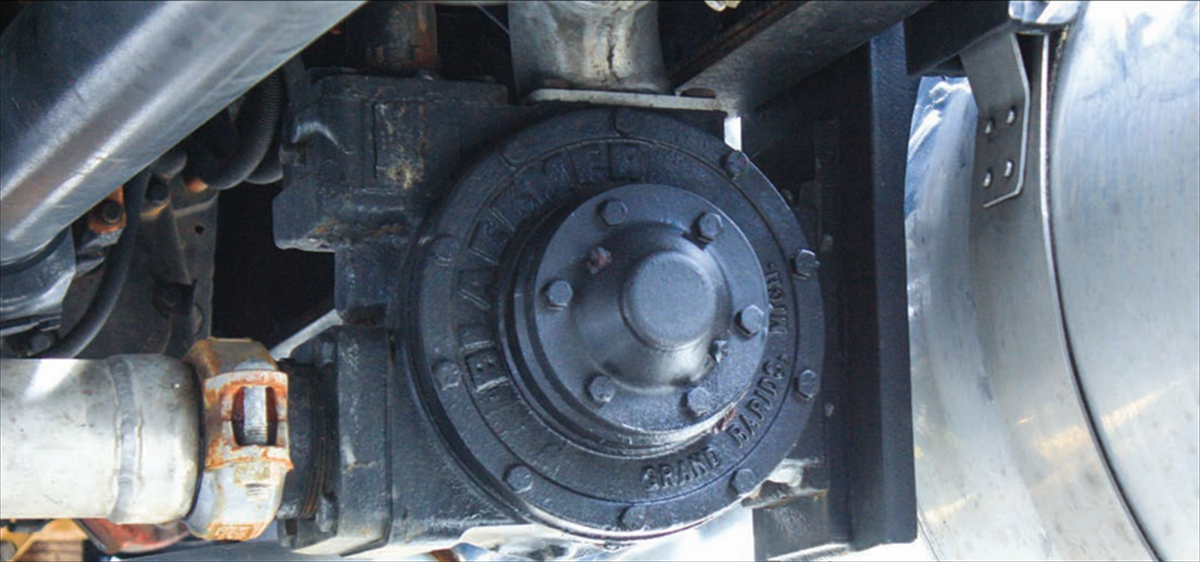
Blackmer® TXD Series Sliding Vane Pumps use
wear-compensating vane technology for these duties and let you replace the vanes without removing the pump from the truck. The TX/TXD family includes models with nominal flow
ratings from 56 to 505 gpm, although actual capacity depends on the fluid and installation.
These features can be valuable when frequent unloading and field maintenance are part of the operating schedule. However, comparing pumps against a fleet's pressure requirements,
suction conditions and service practices remains essential to choosing equipment that will perform reliably over time.
For more information, read our white paper:
How Sliding Vane Pumps Outperform External Gear Pumps in Transport Applications.
Looking to improve tank truck unloading performance? Fill out our contact form to speak with a
Blackmer specialist about maintaining consistent flow, simplifying maintenance and improving unloading efficiency. You can also
contact your local distributor for more information.