AS THE USE OF VAPOR-RECOVERY UNITS AT OILFIELD STORAGE-TANK FACILITIES GROWS, SO DOES THE NEED TO UNDERSTAND THAT PROPER SKID-ASSEMBLY INSTALLATION WILL HELP GUARANTEE THEIR RELIABLE PERFORMANCE
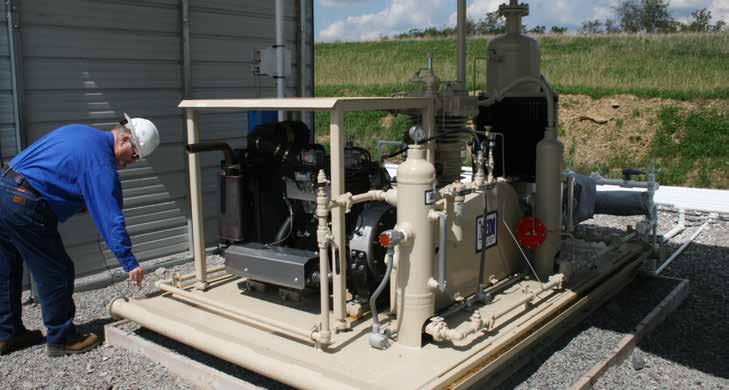
The use of vapor-recovery units in the oilfield is on the rise, for both economic and environmental reasons. Blackmer® Oil-Free Reciprocating Gas Compressors are vital components in many of these installations.
Oilfield storage sites have long been the backbone of production operations, serving as critical hubs for the collection, storage and transport of hydrocarbons. Built to accommodate increasing production volumes without sacrificing efficiency, these sites help ensure that oil and gas reach their next destination safely and on time.
However, as the industry has grown, so too has the complexity and scale of storage operations. In fact, in 2025, the global oil storage market was estimated to have reached a capacity of 2,233 million cubic meters, with the global crude supply averaging 106.3 million barrels per day.
This expansion has placed unprecedented demands on storage sites, pressuring operators to minimize downtime and optimize tank turnover. But that’s only one piece of a larger puzzle.
The increase in oilfield activity has also meant a corresponding increase in the amount of vapors that are created and emitted during production, transportation and storage. To prevent the escape and loss of these vapors – which are saleable assets in addition to being potentially dangerous to the environment – many operators are turning to the installation of vapor-recovery units (VRUs) at their oilfield storage sites.
These VRUs only operate at peak efficiency and effectiveness, however, if they are correctly installed. This article will show how the proper installation of a VRU skid assembly for in-the.field use will optimize the performance of the equipment while eliminating many environmental and maintenance concerns.
The Challenge
The growth in the amount of vapors that are a by-product of oilfield production activities is not going away. Neither is the attention that regulatory agencies will be paying to the levels of vapors that are emitted into the atmosphere and whether or not they can be harmful. That’s because many oilfield vapors – compounds like benzene, toluene, ethyl-benzene and xylene – have been classified as Hazardous Air Pollutants (HAPs) or Volatile Organic Compounds (VOCs) by the U.S. Environmental Protection Agency (EPA).
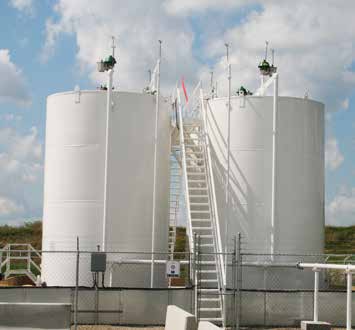
In-the-field storage tanks are used to house raw crude oil and natural gas before it can be transported for refinement. Operators must control the amount of potentially harmful vapors that are released to the atmosphere from the tanks and are turning to vapor-recovery units as a solution.
Because of this, the operators of oilfield storage facilities must closely monitor the amount of vapors that are being emitted at their sites (if any) and meet the emission thresholds of the Title V Operating Permit Program of the Clean Air Act, which were put into place in 1990. According to Title V, regulated pollutant thresholds for stationary sources include 100 tons per year (tpy) for criteria pollutants, and from 10 tpy per year for one HAP, or 25 tpy for multiple HAPs.
Oilfield storage-facility operators also must be aware of the EPA’s New Source Performance Standard 40 CFR, Part 60, Subpart OOOO, which became law in 2012 and has come to be known as the “Quad O” regulation. Quad O establishes emissions standards and compliance schedules for the control of VOCs and sulfur dioxide (SO2) emissions from storage tanks that temporarily house liquids produced during oil and gas production.
Enter the VRU. Basically defined, a VRU is a system composed of a scrubber, a compressor, a driver and controls whose main purpose is to recover vapors that are formed inside completely sealed crude-oil or condensate storage tanks. During the VRU’s operation, the controls detect pressure variations inside the tank and turn the compressor on and off as the interior pressure exceeds or falls below pre-determined settings. When the compressor is running, it passes the vapors through the scrubber, where any liquid is trapped and returned to the tank, while the vapor is recovered and compressed into natural gas lines.
For use in the oilfield, the components of the VRU are generally installed on a skid assembly, with the skid able to be easily moved and installed as one complete unit.
Operational problems arise when that skid is not installed or anchored properly to the ground. Most issues during the operation of a poorly installed VRU skid show up at or near the compressor, which is the heart of the VRU system.
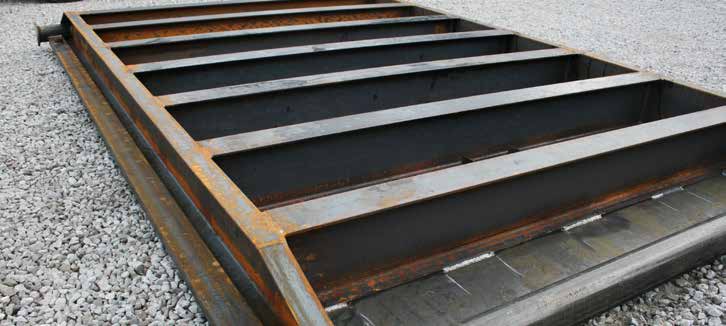
All reciprocating-type compressors will produce shaking forces and moments. If the compressor is not installed correctly, those shaking forces and moments will create vibrations that can harm the performance of the compressor and VRU.
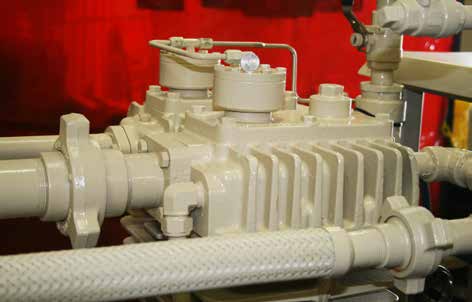
Prolonged operation with an improperly designed skid or poor foundation can damage the compressor and compromise the VRU’s overall operational effectiveness and reliability.
It is a given that all reciprocating-type compressors will produce some shaking forces and moments, which can be caused by a wide array of operational characteristics, including speed, height, cylinder orientation, intake/discharge pressures, single- or double-acting operation, compression ratio and application conditions like gas composition, or site, placement and environmental variations. If those forces or moments are not properly absorbed into the mounting or foundation of the operating system, then vibration of the compressor can occur.
The Solution
For more than a century, Blackmer® has been building a reputation as a reliable manufacturer and provider of equipment that can be used in oilfield activities. This positive reputation extends to its various lines of Oil-Free Reciprocating Gas Compressors, namely the HD, HDS and NG Series models. All can reliably and effectively be used as part of an in-the-oilfield VRU that can optimize operational performance and production while reducing costly downtime and maintenance.
However, there is one very important caveat…the VRU base and skid assembly must be installed correctly. Blackmer has recently noticed that a number of reciprocating compressor oilfield VRU installations were not operating at peak performance. After investigating these issues, it was found that the issues were not being caused by any individual VRU components; instead it was found that the skid assemblies on these installations were not properly designed and/or installed. Prolonged operation with an improperly designed skid or poor foundation can damage the compressor and compromise the VRU’s overall operational effectiveness and reliability.
To help educate the industry and optimize the performance of storage-facility VRUs and their components, Blackmer has produced a video titled “Does Your VRU Compressor Vibrate? It Shouldn’t,” that has been designed to explain and illustrate the correct way to prevent vibration in the skid assembly. Proper skid assembly is paramount because when operating at peak speeds, reciprocating compressors can produce unbalanced forces.
-hds-and-ng-series-models.jpg?sfvrsn=7b263bcf_1)
Blackmer® offers its HD (shown), HDS and NG Series models of Reciprocating Gas Compressors for use in oilfield applications.
Specifically, the short video, which was produced with the help of Electronic Design for Industry (EDI), at its test facility in Ohio, spells out the following steps that should be taken and parameters that should be met for proper skid assembly:
- The compressor should be anchored to a baseplate (or skid) that is at least four times the compressor’s weight
- The baseplate with the compressor and other VRU components should be bolted to a concrete slab/pad
- The concrete slab/pad should be situated on a level surface
- The pad should be prepared and graded, if necessary
- The baseplate skid should never be installed on non-compacted soil
If these simple rules for skid-assembly installation are followed, the amount and severity of the forces and moments that occur during compressor operation will be minimized, resulting in almost vibration-free operation that will help optimize the VRU’s performance and longevity.
Conclusion
In the fast-growing oil and gas industry, speed, portability and reliability are key factors in optimizing production times and the bottom line. There is now an almost constant need for the installation of VRUs in the oilfield as production operations continue to accelerate. VRUs themselves are complex, highly engineered systems designed for reliable performance in a variety of harsh operating conditions. However, the oilfield’s rugged terrain, combined with the need for rapid deployment and a reduction in site-time preparation, can compromise VRU installation. OEMs and system fabricators who take the time to install the VRU’s skid assembly correctly will find that any subsequent time and cost incurred because of downtime, repairs and maintenance will be greatly reduced.
- To view a helpful video on this topic, please click here.
- To download the full white paper, please click here.
- In addition, you can also view the video by visiting the Blackmer Download Library and searching for “VRU.”
About the Author:
Ron Crouch is a Product Management Director for Blackmer and PSG. He can be reached at ron.crouch@psgdover.com. For more information on the full line of Blackmer pumps and compressors, please call +1 (616) 475-9352 or visit blackmer.com. Blackmer is a product brand of PSG, a Dover company, Downers Grove, IL, USA. PSG is comprised of several leading brands, including Abaque, All-Flo, Almatec, Blackmer, Ebsray, em-tec, Griswold, Hydro, ipp, Malema, Mouvex, Neptune, PSG Biotech, Quantex,Quattroflow and Wilden. PSG products are manufactured on three continents – North America, Europe and Asia – in state-of.the-art facilities that practice lean manufacturing and are ISO-certified. PSG is part of the Pumps & Process Solutions segment of Dover Corporation. For additional information on PSG, please visit psgdover.com. PSG: Where Innovation Flows.