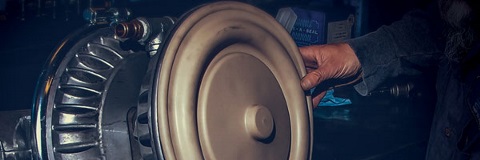
While air-operated double-diaphragm (AODD) pumps are valued for their simple design, diaphragm life is anything but fixed. It varies significantly with application conditions, material selection, installation and operating practices. Understanding how to get the most out of your diaphragms makes the pump more effective overall and helps maximize its service life.
In this blog, we cover the four most common questions our Wilden® pump specialists hear about extending diaphragm life, including what causes premature wear, how operating conditions affect longevity and what can be done to improve performance.
How often should AODD pump diaphragms be replaced?
Diaphragm replacement intervals depend on the product being pumped and the operating conditions, and they vary widely across applications. As a general guideline, inspect diaphragms every three to six months for wear or cracks and replace them at least annually or according to your site's preventive maintenance plan.
Diaphragm life is typically limited by the diaphragm material's natural flex life, so the average life tends to be fairly consistent each time a set is replaced in the same application.
That consistency is useful. Note how long the first set lasts, then check your stock of repair kits once you reach roughly 80-90% of that figure, so you can get the pump back in service quickly when the time comes.
What are the signs that diaphragms or check valves need replacing?
You should replace your pump’s diaphragms or check valves if you notice any of the following:
- Decreased flow
- Loss of prime
- Leakage from the air exhaust
- Abnormal pump sounds
Regular inspection catches this wear before it leads to downtime caused by pump failure.
Replace all wet-end wear parts at the same time. When one component is nearing the end of its wear life, the others usually are too, so changing everything in a single service keeps the pump out of the shop less often.
What causes AODD pump diaphragm failure?
Diaphragm failure can look difficult to diagnose, but it generally happens in one of three ways, and the diaphragm itself tells you which one.
- Puncture holes
A puncture occurs when unwanted solids — such as rocks or calcified buildup — enter the pump. If you discover a puncture, install an inlet strainer to prevent large solids from entering the pump in the future. - Fraying or cuts near the outer piston
Fraying and cuts in this area indicate a highly abrasive fluid. Abrasive material tends to get trapped between the outer piston and the diaphragm, increasing wear in that area. Diaphragms made of thermoplastic elastomers such as Wil-Flex® , Saniflex™ and Bunalast are naturally more abrasion-resistant than rubber or PTFE diaphragms and will last longer in abrasive applications. Wilden Chem-Fuse™ Integral Piston Diaphragms (IPDs) remove the pinch point between the outer piston and the diaphragm entirely, increasing diaphragm life further. - Flex creases and vertical tears
These come from strain during normal use. This is natural, caused by the diaphragm flexing during service. The concave design of the EZ-Install Diaphragm distributes that stress more evenly during operation and improves wear life. A thermoplastic elastomer diaphragm and a larger pump running at a lower speed will both increase the mean time between failures.
How can I extend the life of diaphragms, balls and seats?
Material selection delivers the biggest gain on diaphragms specifically. Choose the diaphragm material with the longest flex life that is still compatible with your process fluid. Moving from a rubber such as EPDM to a thermoplastic elastomer such as Wil-Flex often increases wear life because Wil-Flex has a naturally longer flex life with a similar chemical compatibility. Switching from a traditional pie-shaped diaphragm to an integral piston diaphragm of the same material can also lead to a significant increase.
On the process side, filtering sharp particles out of the fluid improves the life of every elastomeric component in the pump, balls and seats as much as diaphragms. If the fluid is abrasive, slow the pumping speed down or move to a larger pump so it can run slower at the same duty.
A filter regulator on the air side is worth installing to ensure the pump is not over-pressurized. The general rule holds across all three components: the slower the pump runs, the longer the diaphragms, balls and seats last.
Have more questions about how to extend diaphragm life in your Wilden AODD Pumps?
Reach out to a Wilden AODD pump specialist using our contact form. You can also contact your local distributor for more information.